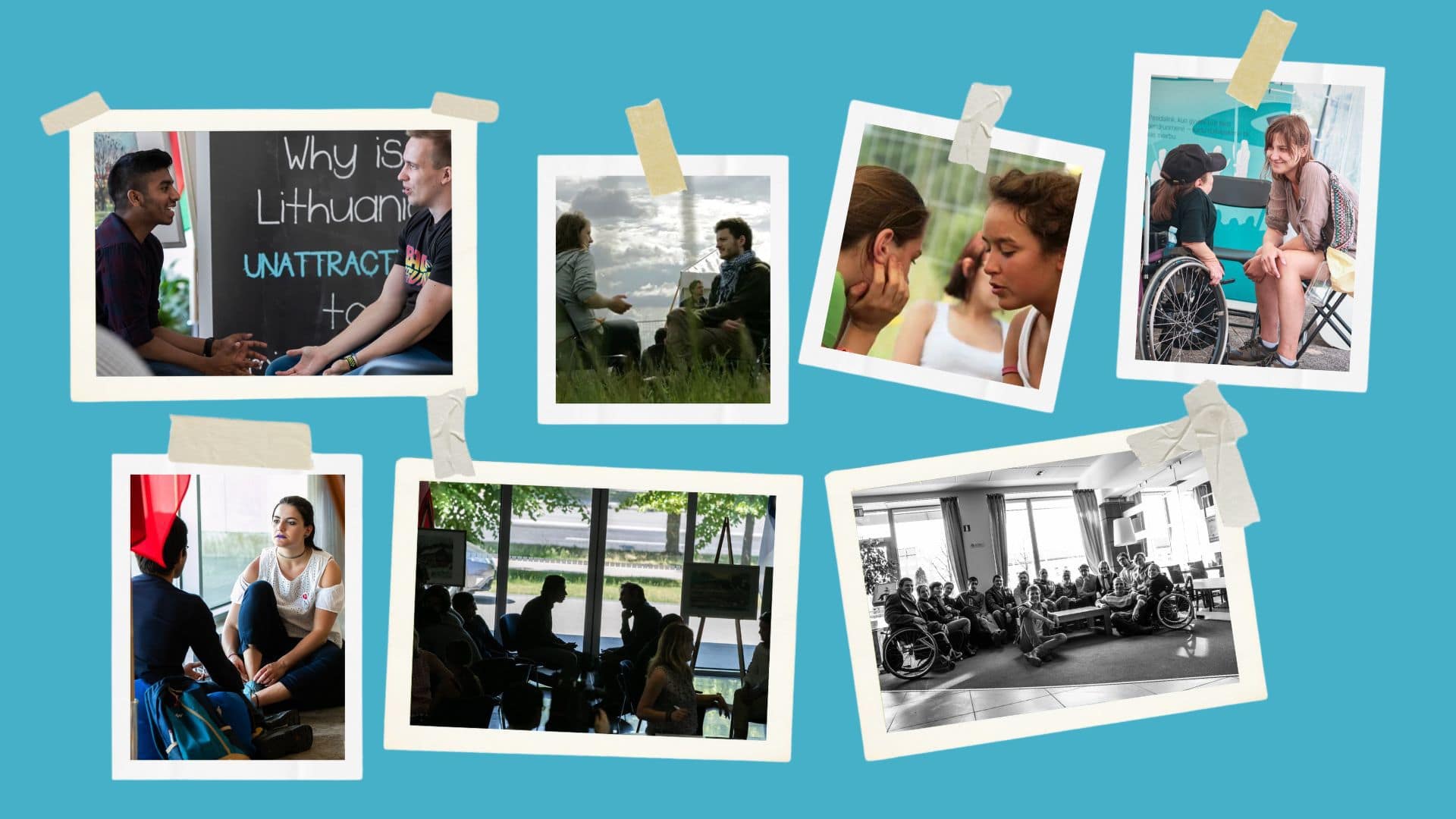
Sometimes people are talked about a lot, but rarely spoken with directly.
The Living Library creates spaces where people can meet and talk about experiences that often remain outside public discussions, quick judgments, or other people’s narratives.
The Living Library is looking for voices that often go unheard
Sometimes people are talked about a lot, but rarely spoken with directly. The Living Library creates spaces where people can meet and talk about experiences that often remain outside public discussions, quick judgments, or other people’s narratives.


In the Living Library, people become books – sharing their life stories, while readers can “borrow” them for a face-to-face conversation.
A book is not an expert or a public speaker. It is a person who allows others to understand their experience through a calm, respectful conversation.
This is not a space to prove a point or win an argument. What matters most is sharing your story and being willing to engage with curiosity, respect, and openness.
Sometimes one such conversation can help people not only hear one another, but also better understand what lies behind different experiences and perspectives.
Could this be your story too?
You might consider becoming a “living book” if you answer “yes” to at least one of these questions:
- Has your life experience ever been misunderstood or interpreted by others without your voice being heard?
- Have you ever felt that people talk about your community, but rarely talk with you?
- Have you ever been asked questions about yourself that you wish you could answer openly and calmly?
- Have you experienced being treated differently at work, in education, or in everyday life because of your identity, background, experiences, or life path?
- Would you like to share your story in a conversation where people ask questions not to argue, but to understand?
If at least one of these questions feels familiar, the Living Library may be looking for your story.
What kinds of stories can become books?
Each book has its own “title” — a short way to introduce the experience people can talk about.
For example:
- “I live with a disability”
- “I moved to another country”
- “I grew up in a Palestinian family”
- “I grew up in a Jewish family”
- “I belong to a religious minority”
- “I am part of the LGBTQ+ community”
- “I grew up in the child care system”
- “I grew up in the Roma community”
- “I live between different cultures”
However, the Living Library is not about labels..
A book title is simply an invitation to conversation. Behind it there is always a much broader, more complex, and more interesting human story.
Who can become a book?
A book can be someone who:
- wants to share their experience;
- is willing to talk with strangers;
- respects different questions and perspectives;
- wants to contribute to dialogue and mutual understanding;
- feels emotionally safe and stable enough to speak about their experiences.
What matters most is openness to conversation and respect for others.
Who cannot become a book?
The Living Library is not a space for political campaigning, ideological debates, or attempts to convince others of a particular position.
A person cannot become a book if they seek to:
- use the conversation for political or ideological campaigning;
- convince others of their views rather than share personal experience;
- spread hatred or discrimination;
- share experiences that would currently be emotionally too difficult for them to discuss.
The Living Library aims to create spaces where respect, curiosity, and willingness to listen come first.
How does the Living Library work?
In the Living Library, readers can “borrow” a book for a conversation.
- Conversations usually last around 20–30 minutes.
- One or several readers may participate in the conversation.
- Questions can be asked openly and respectfully.
- The Living Library team helps books prepare and ensures a safe, supportive atmosphere.
The most important part of the method is the live conversation between people.
About the Living Library
The Living Library has been active in Lithuania for nearly 20 years. During this time, thousands of people have had the opportunity to meet and talk about experiences that often remain unheard.
Today, we aim not only to continue this initiative, but also to adapt it to a time when real encounters between different lived experiences are becoming increasingly rare, and society increasingly needs spaces where people can not only speak, but truly hear one another.
As the Living Library approaches its 20th anniversary, we invite people who want their story to become another meaningful conversation.
If you feel this could be your story
Fill out the application form by May 29 and we will get in touch with you.
Perhaps your story will become the conversation that helps someone see the world differently.